
As proposals to establish two independent states, Afghanistan and Khorasan, gain attention in some political circles, Kazem Jalali’s decision to focus on Iran’s confrontation with the United States and Israel rather than Afghanistan has prompted questions about the region’s evolving political calculations.
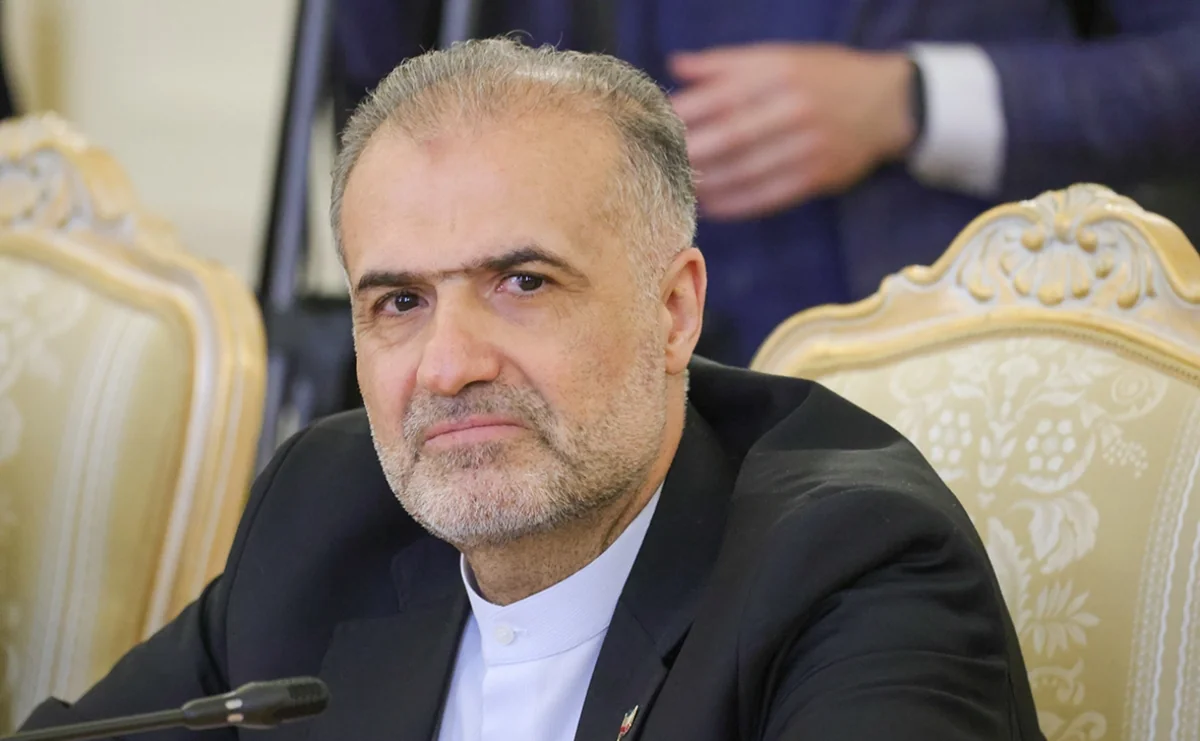
Kazem Jalali, Iran’s ambassador to Russia, devoted much of his remarks at a Moscow security conference to Iran’s conflict with the United States and Israel, making no substantive reference to Afghanistan in the published accounts of his speech, despite the country being one of the meeting’s principal subjects.
His omission comes amid a debate among some political activists, intellectuals and former officials over the future of Afghanistan’s political geography. At the center of that debate is an increasingly explicit proposal for a two-state solution, under which Afghanistan and Khorasan would emerge as separate, sovereign countries, each with its own territory, political institutions and national identity.
For supporters of the proposal, the question is no longer simply how to reform Afghanistan’s political system or establish an inclusive government. It is whether the political framework that has held the country together can continue to accommodate communities with profoundly different understandings of identity, authority and the state.
Two Political Cultures That Cannot Be Reconciled
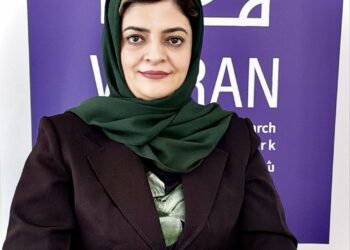
Among those who have articulated this argument is Abdullah Khodadad, a former diplomat who served in the United States.
In an interview with Pors-o-Goft, a podcast produced by Etilaatroz, Khodadad discussed Afghanistan’s political predicament through the idea of what he described as “two irreconcilable political cultures.” The interview’s published description also highlights his characterization of Afghanistan’s existing political story as having reached its end.
The significance of this argument lies in its departure from conventional explanations of the country’s political crisis.
For decades, much of the discussion about Afghanistan’s future has revolved around the distribution of power, the composition of government, constitutional arrangements and the relationship between the center and the provinces. Even proposals for federalism or decentralization have generally assumed that the country’s existing territorial framework should remain intact.
The argument advanced by supporters of a two-state solution challenges that assumption.
In their view, Afghanistan’s recurring crises cannot be explained solely by the Taliban’s return to power, the failure of successive governments or the exclusion of particular communities from political institutions. They see a deeper conflict between competing political cultures, each with a different conception of the state, collective identity, social order and legitimate authority.
From this perspective, repeated attempts to accommodate these competing visions within a single political structure have not resolved the underlying conflict. Instead, supporters argue, they have reproduced it under different governments and political systems.
The notion of two irreconcilable political cultures therefore carries a more consequential implication: if the disagreement concerns the foundations of political life rather than the allocation of government positions, another agreement to share power may not provide a lasting settlement.
It is this reasoning that gives the proposed two-state solution its distinctive political character.
Beyond Federalism: The Proposal for Afghanistan and Khorasan
Unlike proposals for federalism, regional autonomy or administrative decentralization, the two-state model envisions two fully independent countries.
Each would possess its own government, legal system, foreign policy and security institutions. Their relationship would be defined not through a shared central authority but through the diplomatic, economic and political arrangements normally established between neighboring sovereign states.
Within this framework, Khorasan is presented not merely as a historical or cultural designation but as the proposed foundation of a separate political entity.
The name carries considerable historical significance. Across different periods, Khorasan has referred to a broad cultural and geographical region extending across parts of present-day Central and South Asia. In contemporary political discourse, some activists and intellectuals have invoked that historical identity to challenge dominant narratives of statehood and national belonging in Afghanistan.
Supporters of the proposed division envision a modern Khorasan extending from Badakhshan in the northeast to Herat in the west, incorporating parts of the central and eastern regions, including Kabul, Logar and Ghazni.
These are proposed political boundaries, not internationally recognized borders or an agreed territorial settlement.
Under the envisioned arrangement, Afghanistan and Khorasan would exist as neighboring states rather than autonomous territories within a common political system.
The proposal also reflects a broader argument about political coexistence.
Its supporters contend that communities should not be required to remain within a single state if their competing visions of governance and identity have become fundamentally incompatible. They argue that two independent political systems could allow each society to determine its own institutional arrangements while maintaining diplomatic and economic relations with the other.
The idea is not entirely new. Political writings and proposals advocating an independent Khorasan have circulated for years, including documents that explicitly envision the establishment of two sovereign countries.
What has changed, according to advocates, is the context in which these ideas are being discussed. The collapse of the former republic, the Taliban’s return to power and the continuing exclusion of large sections of society from political decision-making have intensified questions about whether the country’s existing political structure offers a viable path toward stability.
For these advocates, the two-state solution is no longer simply a question of historical identity. It has become a proposed response to a political deadlock they regard as structural.
Why Jalali’s Silence Matters to Supporters of the Proposal
It is against this backdrop that Jalali’s remarks in Moscow have attracted attention.
Iran is among Afghanistan’s most consequential neighbors. Developments across their shared border affect Tehran’s security calculations, trade, water resources, migration policies and relationships with other regional powers.
Iran has also maintained an active diplomatic role in discussions about Afghanistan’s political future, including through regional meetings involving Russia, China and neighboring states.
For that reason, Jalali’s apparent decision not to address Afghanistan at a conference where the country featured prominently on the agenda has become a point of interest for supporters of the two-state proposal.
The contrast with his earlier statements is particularly notable.
Only days before the security conference, Jalali had addressed Afghanistan’s political future during a meeting of the Moscow Format, emphasizing the importance of establishing an inclusive political structure as a condition for lasting stability.
At the subsequent meeting, however, published accounts of his remarks focused overwhelmingly on Iran’s confrontation with the United States and Israel, the consequences of military attacks and Tehran’s opposition to intervention by powers outside the region.
They contained no comparable discussion of the Taliban, inclusive governance or Afghanistan’s future political arrangements.
For supporters of the two-state solution, this difference raises questions about whether regional governments are beginning to reassess assumptions that have long shaped their approach to Afghanistan.
Their interpretation rests on a broader observation: major geopolitical transformations do not always begin with formal declarations.
Sometimes, they argue, changes in diplomatic language, the disappearance of familiar political formulas or a reluctance to repeat previously stated positions can precede more explicit shifts in policy.
From this perspective, Jalali’s silence is being examined not as an isolated diplomatic omission but as a possible indication of changing regional calculations.
Is the Existing Political Geography Still Taken for Granted?
The debate touches on a question that has rarely occupied the center of regional diplomacy: whether Afghanistan’s current territorial and political configuration will remain the unquestioned framework for future negotiations.
For years, international and regional discussions have largely focused on the type of government that should exercise authority within Afghanistan’s existing borders.
The central questions have concerned political inclusion, security, counterterrorism, economic integration and the Taliban’s relationship with the international community.
The two-state proposal shifts the debate to a different level.
Rather than asking which groups should participate in a central government, its supporters ask whether the existence of a single central government should remain the starting point of every political settlement.
Rather than treating competing identities and political traditions as problems to be managed within one state, they propose recognizing them through separate sovereign institutions.
This is where Khodadad’s argument about two irreconcilable political cultures becomes especially relevant.
If the crisis is understood as a dispute over political representation, a new distribution of power may appear sufficient. But if it is understood as a conflict between incompatible conceptions of political order, the case for preserving a single state becomes, in the eyes of the proposal’s supporters, considerably more difficult to sustain.
Their argument is that a lasting settlement may require changing the political framework itself rather than repeatedly attempting to reform institutions within it.
They also maintain that the creation of two independent states could transform a prolonged struggle for control of one central government into a relationship between neighboring political entities, each responsible for its own institutions and future.
Whether such an arrangement could resolve longstanding disputes over territory, identity, resources and political legitimacy remains an open question. Nevertheless, the proposal represents a significant departure from the conventional vocabulary of inclusive government and power-sharing.
A Diplomatic Omission or a Sign of Changing Calculations?
Jalali’s silence does not, by itself, establish that Iran is reconsidering Afghanistan’s territorial integrity.
Tehran has made no public declaration supporting the division of Afghanistan or the creation of an independent state called Khorasan. Nor is there publicly established evidence that Jalali’s choice of subjects at the Moscow meeting was connected to the two-state proposal.
His emphasis on Iran’s confrontation with the United States and Israel may also reflect the immediate priorities of Tehran’s foreign policy.
Yet supporters of the two-state solution regard the absence of a clear explanation as politically significant.
For them, the question is not simply why Iran’s ambassador avoided discussing Afghanistan at a conference devoted partly to its security. It is whether influential regional powers are beginning to contemplate political scenarios that extend beyond the familiar demand for an inclusive government.
The distinction matters.
An inclusive government assumes that Afghanistan’s competing political communities can eventually reach an accommodation within one state. The two-state proposal begins from the opposite premise: that the underlying political cultures may have become too divergent for such an accommodation to endure.
These are not merely different institutional arrangements. They represent competing understandings of the country’s history, identity and possible future.
For supporters of an independent Khorasan, the growing discussion of two sovereign states reflects a conviction that Afghanistan’s prolonged political crisis cannot be resolved through another attempt to reconstruct the same centralized political order.
Jalali’s remarks provide no evidence that Iran has embraced this conclusion. But his omission has given advocates of the proposal another occasion to bring their argument into a wider geopolitical conversation.
The larger question now extends beyond one ambassador’s speech.
Will regional governments continue to approach Afghanistan’s future exclusively through the framework of inclusive governance within existing borders, or could alternative political arrangements, including the creation of two independent states, eventually enter their calculations?
For the moment, there is no official indication that such a shift is underway.
What is increasingly visible, however, is a debate among some political thinkers and activists over whether the political geography inherited from the past can still provide a foundation for a stable future.
Within that debate, the idea of two irreconcilable political cultures has become an argument for something far more consequential than constitutional reform: the possibility of two countries, Afghanistan and Khorasan, emerging from a political order whose future remains deeply contested.